Cycle Touring in Territorio K’iche
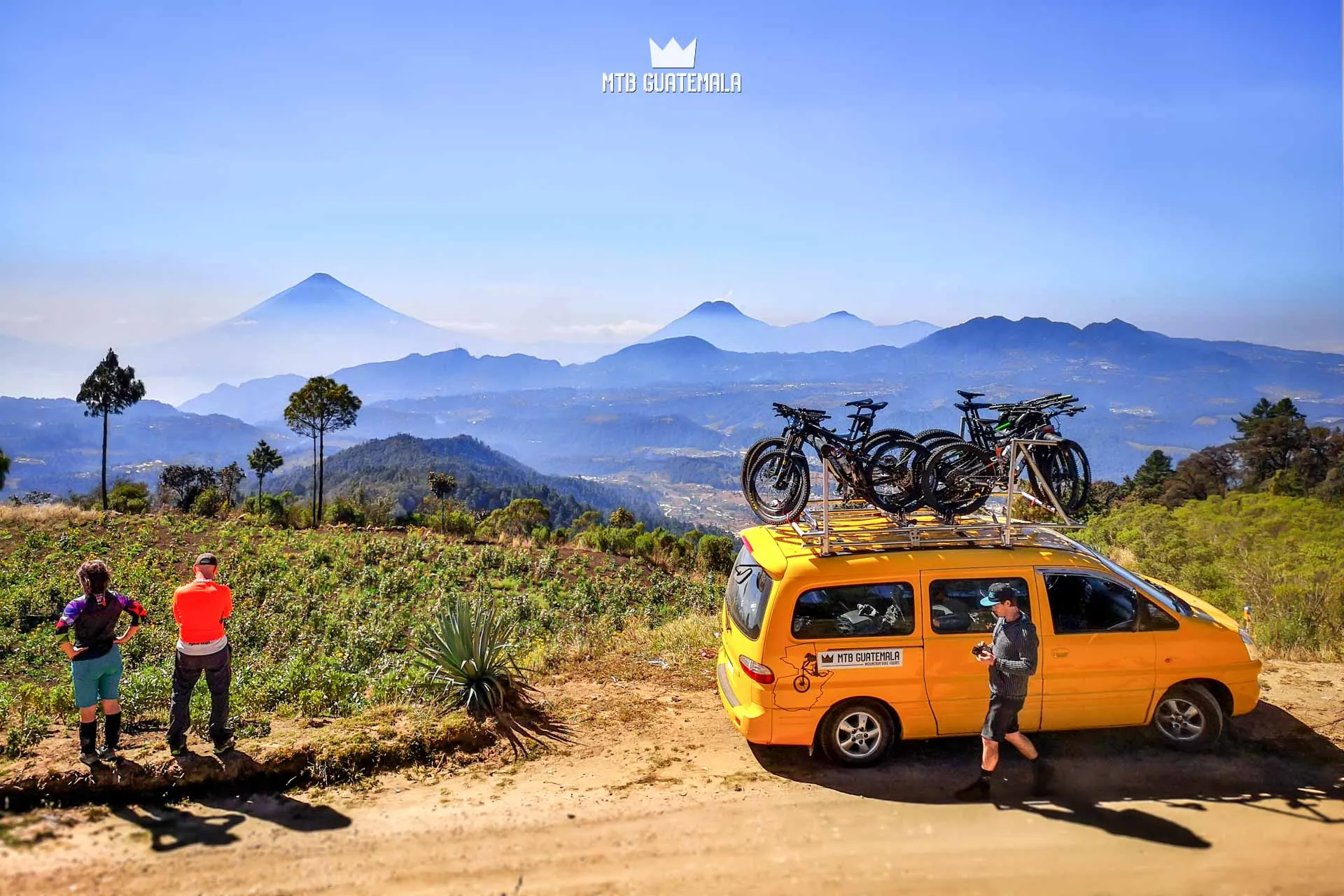
It is a cool morning and the sky is clear, we are full of emotion for the adventure we are about to discover. Our group from Moab Utah are friends and passionate cyclists who are about to see Guatemala as few do – by bike.
We are at 3100m (10,500 ft) shuttling to the top of a mountain; the air is cold and fresh. We can see for miles views of the volcanic chain, the majestic Lake Atitlán and the many remote towns of the Guatemalan highlands.
Our cycling group is here learn about the of the descendants of the great Mayan civilization: the K’iche. We will cross their territory, cycling from the high mountains of Totonicapán to the famous market of Chichicastenango making visit to the Mayan ruins of Q’markaj in a grand tour by bike.
The following is as trip report from a single day in an custom 5 day point to point tour cycling tour of Guatemala February 2020 originally written in Spanish.
Crossing the Highlands
A protected area, reforested with pines and other native trees, at the entrance to the María Tecún altar. No rush, no pressure, just fun! This is ecotourism.
A Region Full of Culture, Mountains and Forests
K'iche' is a large department, and its varied topography creates many different climates, from cool and temperate to much warmer. The region is full of great ravines and canyons, with everything from densely forested areas to dry, desert-like land.
Totonicapán is one of the smallest departments in Guatemala. It sits on the Sierra Madre, its land is cut by ravines, and only a small part of its territory is flat. It has a wealth of forest, full of aqueducts and trails that connect to the town.
In the Mayan language, the word K'iche' means 'many trees', and that is exactly what we enjoy here: high-altitude pine and oak forests, home to many species of wild plants and animals.
The Altar of the Stone Maiden, or María Tecún
We hear voices and singing, and see smoke rising from an enormous stone tower. We can feel that this is a place full of peace and calm. Our guide Brendan tells us that we are in a sacred place, where Indigenous people come to perform Mayan ceremonies, and that we must show them respect.
We stop to unload the bikes. It is very windy, and we can feel the thinner air of this region's high mountains. We can feel the spirit of the place. The Maya have been using this site for more than 600 years. We set off along ancestral trails that lead to the altar.
The guide leads us toward the María Tecún stone. We see children playing soccer in a small meadow while a group of women prepare 'pulike' (pulique, a traditional pre-Hispanic stew). Some greet us in their Mayan language and others in Spanish, with big smiles on their faces.
But what are they celebrating?
We come across a group of men gathered around a circular stone, laying out candles, incense, tobacco, liquor, sugar and other offerings to the Heart of Sky and Heart of Earth, to mark the day of man and the change of authorities according to the Mayan calendar.
They tell us they burn the offerings because they believe spiritual energies live in the air, and the only way to feed them is through smoke: the essence of the offerings rises up to the sky.
The Alguaciles and Their Staffs of Authority
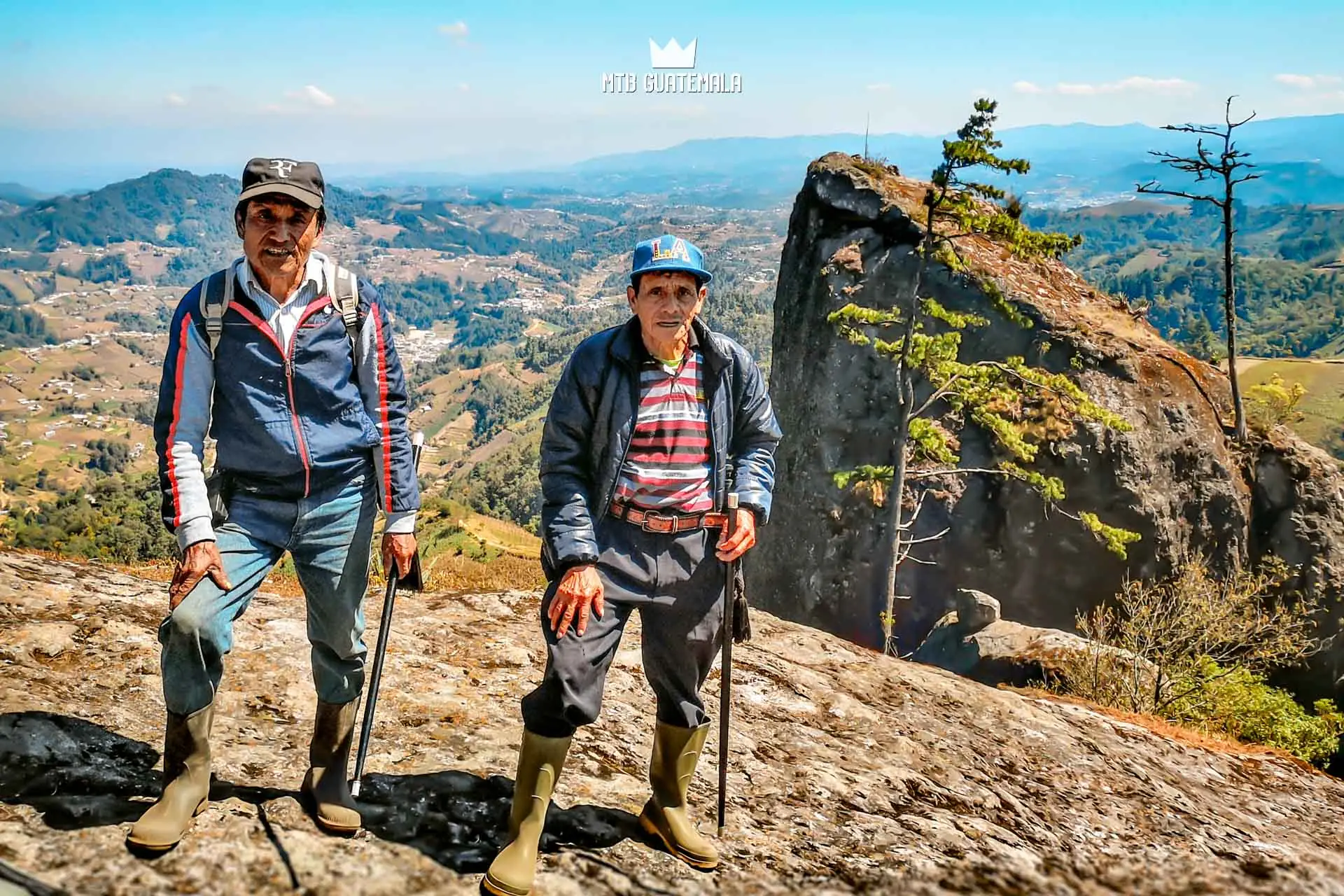
Suddenly two older men appear holding staffs, with serious faces, wrinkles and gray hair earned through experience. Even from a distance you can sense the authority they carry.
Are we in trouble? Who are these people?
It turns out they are forest rangers, very kind and humble men who sit on the community's environment and natural resources board. Their job is to look after 22,000 hectares of forest, mostly pine.
They tell us this place is very sacred, and that its energy or spirit is a young maiden who protects, cares for and defends the forest. They call her María Tecún, María after the Mother of God, so that during the Spanish Conquest the friars and Catholic soldiers would not destroy it.
"This place is very sacred. Its energy or spirit is a young maiden who protects, cares for and defends the forest. They call her María Tecún..."
The Ancestral Forests and the 48 Cantons of Totonicapán
The forests of Totonicapán border the department of Quiché. They are a natural treasure that brings many benefits to the communities, who have always had a very close relationship with the forest and its natural resources, and these have inspired many stories, tales and legends.
Photo: Brendan James
We continue our route on quiet gravel roads, riding our bikes down the mountain with views around every corner. We are so happy to pass through the small Mayan communities, enjoying every kilometer! We reach Pixabaj, a peaceful farming community, where the terraced fields make for a stunning landscape.
Caught by the Kids
Suddenly we are surrounded by more than a dozen children coming home from school. They talk to us in their Mayan language, in Spanish and in English. Is this normal in Guatemala?
We are amazed! They tell us about their community, the crops they grow and the animals they keep. They say we are the first group of cyclists ever to visit, and that they have never seen people with a different skin and hair color speaking another language.
"Cyclist ahead! Bravo! Let's go! Not far now! Almost there!"
These are some of the words the locals use to cheer us on to keep pedaling. It fills us with emotion when we meet children who shout, cheer and clap to keep us going. Some call out to us from the hillsides and make noise with plastic bottles and sticks to show their support.
View of the church and town of Chichicastenango from one of the entrances you won't find on the tourist map. Photo: Brendan James
"Chichi" - Living Mayan Culture
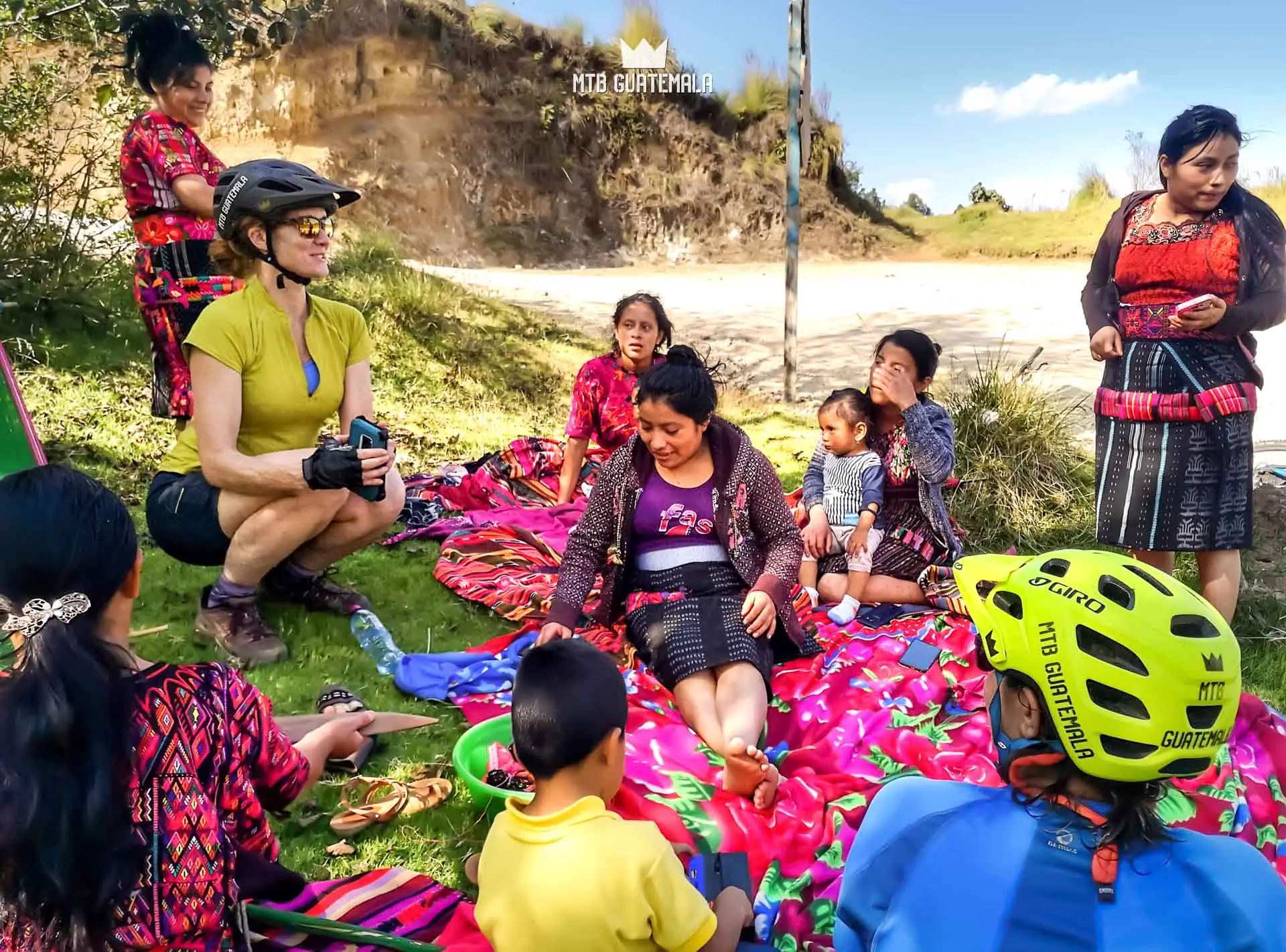
By chance we run into the community leaders of the village of Pixabaj having a picnic lunch. We have fresh tortillas, fruit, vegetables and fried chicken that we bought at the local market, so we share an open-air lunch. Erick, our extra-ordinary driver, is the guacamole expert, and Brendan shows us how to make the wraps. We talk with the mayor about the beauty of his village, and he says we are welcome to come back with our groups.
Market Day in Chichicastenango
We want to arrive in an eco-friendly way at one of the most colorful Indigenous markets in Guatemala, so we take a unique dirt-road route with a very fast descent and views of the K'iche' Maya capital and of peach, apple and avocado orchards.
Along the way we see women and children herding sheep and weaving huipiles (traditional embroidered blouses) and textiles bursting with vibrant colors, with red standing out above all. Wow! They are true artists, this is a work of art. We couldn't resist going over to them to congratulate them and hug them for their work.
A cemetery full of color, old churches, an ancestral market and very humble people: that is what we see from our bikes while our hands and fingers rest for a moment after a long time on the brakes.
'Chichi' is what Guatemalans and foreigners alike call this place, famous for its colorful market of crafts, textiles and a wide range of products made by local artisans, along with all kinds of fruit and vegetables and even farm animals.
Religious syncretism also stands out here: the Catholic church has Mayan altars inside, and the steps of its main entrance are linked to the Mayan calendar.
The Cave - A Mystical, Protective Tunnel
Its walls are blackened by the rituals held inside, where candles and offerings are almost always burning.
This cave served as a refuge for women and children during the Spanish invasion, and a Mayan princess is believed to be buried inside.
Photo: Brendan James
Gumarkaaj - The K'iche' Capital
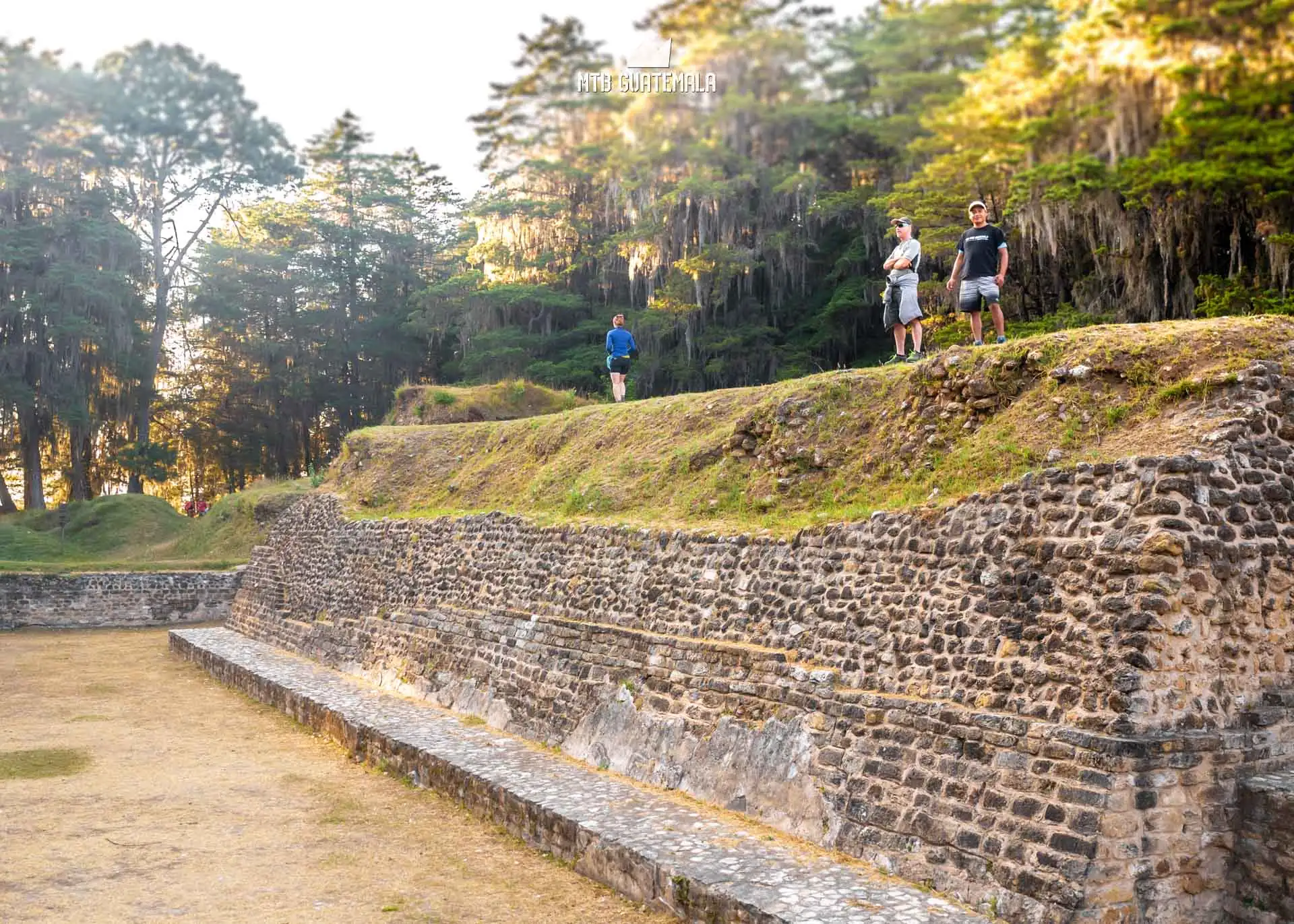
We have been linking trails and Indigenous communities, and now we are exploring the ancient city of the K'iche' Maya, one of the last Mayan cities still inhabited when the Spanish conquistadors arrived. It is built on a mountain surrounded by deep ravines, which served as a natural defense against invading enemies.
Hidden Caves: A Portal to the Underworld
Beneath the ruins lies a large cave. Its walls are blackened by the rituals held inside, where candles and offerings are almost always burning. Animal sacrifices are sometimes made in order to communicate with the spiritual energies of the underworld.
We wrap up our time at the ruins and set off on the next stage of our trip: back to the cold mountains of Totonicapán. We are lucky to be the last visitors of the day at Gumarkaaj; the park rangers wave goodbye as they close the gate behind our van.
Camp in Totonicapán
Photo: Brendan James
Cabin and Ecolodge
We are back in the forests of Totonicapán, far from town, in a place of deep peace and quiet. MTB Guatemala has partnered with the local community so we can spend the night in these forests at 3,200 m, in the heart of the cold this region is known for.
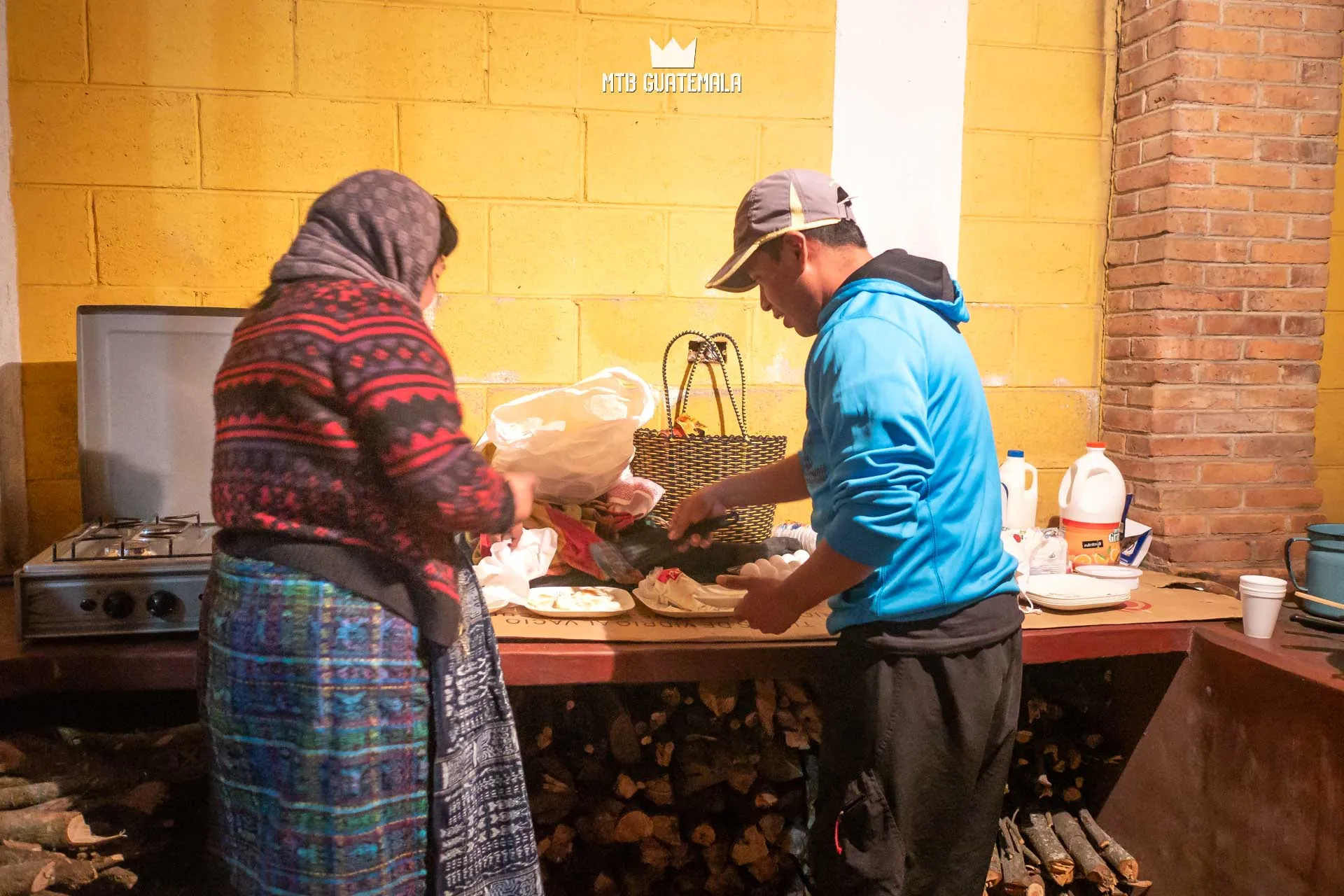
The owners of the property cook us local dishes and fresh black-corn tortillas. We enjoy some hot drinks and warm our hands while they tell us the story of this green project: how they built this cabin and reforested the land over the last few years.
They show us the cabins where we will spend the night and give us plenty of blankets and ponchos so we won't feel the cold. Sharing stories and gazing up at a sky full of stars with new adventure friends The Simple Life
Reflecting on the Adventure
To end the night in a special way, we gather around a campfire with views of the volcanoes and the town of Totonicapán, listening to the crickets, owls, coyotes and other birds, getting to know each other better as a group and swapping stories and experiences.
It's time to rest. It has been a long trip, full of adrenaline, emotion and learning. We wanted to do a bit of everything in a single day, but it wasn't enough: there is so much more to discover and explore in this region.
We recommend planning a trip of several days to make the most of this perfect combination of natural beauty, spectacular mountain scenery and living Mayan culture.
Indigenous culture is most deeply rooted in the Highlands, where pine and oak forests, volcanoes and mountains make for great mountain biking, camping, hiking and other ecotourism activities.
We'll be waiting for you!
-Alex Saqbé
Guide - MTB Guatemala
Photo: Neftali Ajín
MTB Guatemala Adventures
Explore K'iche' territory and the Chichicastenango market!
About the Author

We know that cycle touring helps preserve culture and nature, drives economic development in rural communities and helps improve the quality of life of the people who take part in this project. We encourage you to get in touch so we can help you plan the trip of a lifetime.
